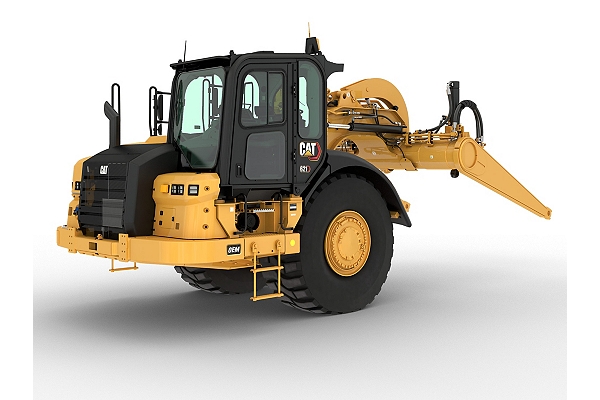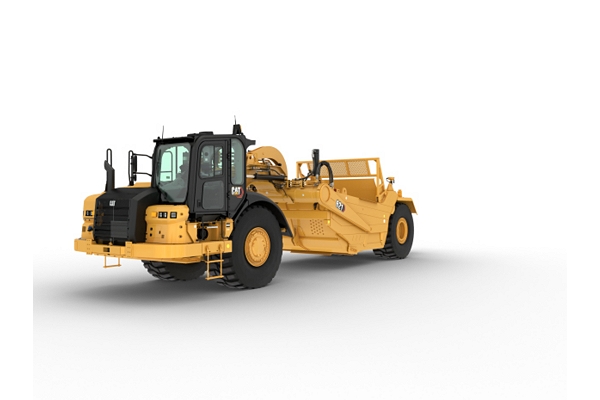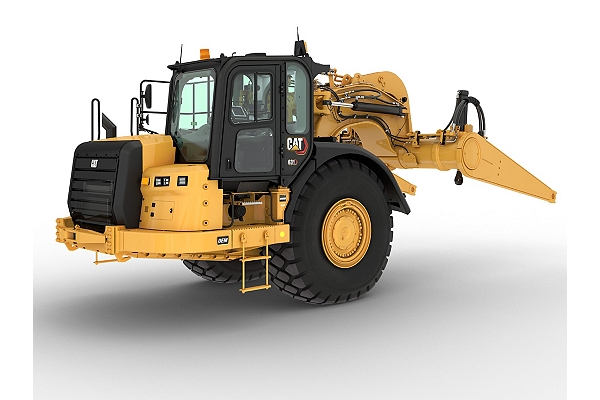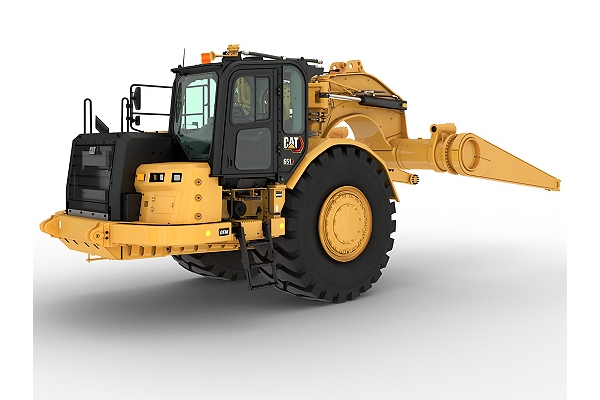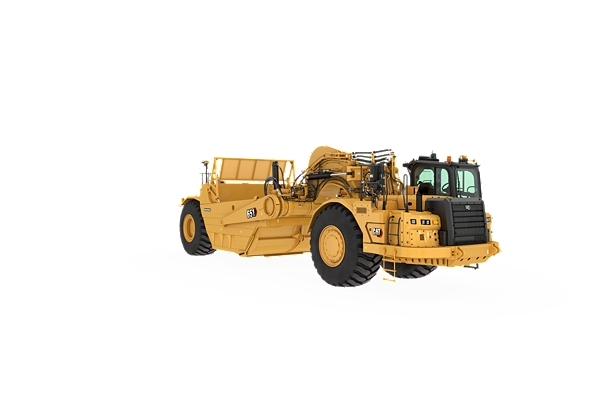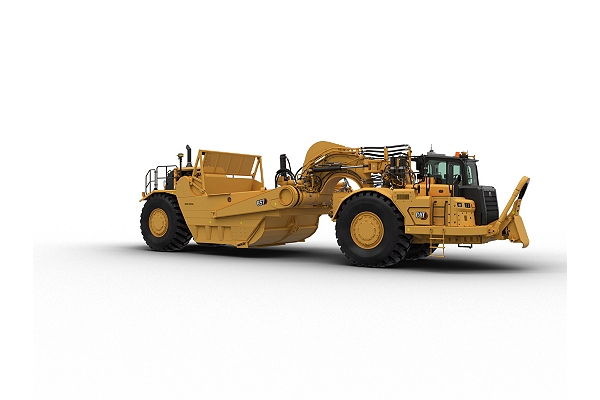
Power Train - Engine Electronically controlled Caterpillar engines with ACERT technology, modular radiator with 9 fins per inch, and an Electronic Control Module maximizes power to the cutting edge and exceptional haul road speed. |
 |
 |  | C15 Tractor Engine The Cat C15 Electronically Controlled Unit Injection (EUI) diesel engine powers the tractor. With dual horsepower capability, it provides high power and torque rise for excellent lugging in tough loading conditions. The C15 is designed for long hours of continuous operation with high displacement and low RPM ratings. |
 |
Dual Horsepower Electronic engines deliver increased power when the auger is engaged or when the machine is in the roading gears, providing quicker acceleration on the haul road. |
 |
ACERT Technology The C15 electronic engine with ACERT technology meets US EPA Tier 3 and European Union Stage III exhaust emission regulations. ACERT technology reduces emissions during the combustion process by using advanced technology in the air and fuel systems, in conjunction with integrated electronics. Caterpillar meets emission regulations at the combustion source rather than recycling exhaust gases. |
 |
Electronic Control Module (ECM) The ECM utilizes advanced engine management software to monitor, control and protect the engine. ECM maintains an active electronic fault log that aids troubleshooting. Engine speed governing doesn’t require any adjustment since it is fully electronic. In addition, ECM improves performance during cold starts as well as compensating for high altitude operations and air filter plugging. Input from sensors allow the ECM to monitor and control injection, timing, injection pressure, engine cooling fan speed, ether starting aid and hydraulic pumps to adjust to any operating condition. |
 |
ADEM™ The ADEM controls engine speed by adjusting the fuel duration, resulting in quicker starts in hot and cold weather, better fuel economy, better operator response, and automatic compensation for altitude and filter plugging. |
 |
Air-to-Air Aftercooling (ATAAC) Reduces air inlet temperature for enhanced combustion efficiency, reduced engine exhaust emissions levels, higher altitude capability, and more power.Advanced Diesel Engine Management System (ADEM) communications with the monitoring system (EMS III) to warn the operator when problems arise, preventing major damage from occurring. |
 |
Greater Reliability The EUI system has fewer moving parts than mechanical unit injection and requires few adjustments. ECM communicates with the monitoring system (EMS) to warn the operator of potential problems, reducing the potential for major damage from occurring. |
 |
Maintenance EUI engines have virtually no mechanically controlled parts to wear or adjust. These have been replaced by electronic controls, reducing maintenance costs and increasing machine availability. |
 |
Control Throttle Shifting (CTS) Automatically synchronizes engine speed to transmission speed when shifting gears. CTS reduces power train stress and increases component life, as well as providing a smoother ride for the operator. |
 |
Automatic Ether Injection ECM activates the ether injection system during engine cranking to help ensure reliable engine start-up in extreme cold operating conditions. |
 |
Directional Shift Management Reduces driveline torque and transmission clutch energy when attempting directional shifts or shifts from neutral during high engine rpm. This helps prevent excessive transmission wear and increases drive train life. A pressure-sequencing valve assures that the speed clutches engage before the directional clutches, to absorb most of the torque load generated in direction changes. |
 |
Automatic Altitude Compensation The ECM automatically adjusts fuel delivery according to barometric pressure as sensed by the system’s atmospheric pressure sensor. No manual adjustment is required. Auto deration prevents excessive combustion temperatures that could result in component damage. |
 |
Diagnostic Capability Electronic Technician (Cat ET) is used to display real-time pressures, temperatures, fuel settings and diagnostic messages as well as historical information, such as engine over-speeds, overheating, low oil pressure and air filter restriction events. |
 |
Fuel Economy Electronic controls yield a fuel savings by optimizing the timing setting for varying conditions. The ECM matches timing to the load on the engine, engine speed and temperature. |
 |
Air Filter Restriction The ECM monitors air filter restriction and sends a warning message to the Electronic Monitoring System III to alert the operator if the restriction exceeds the allowable limit. |
 |
Reduced Exhaust Smoke The ECM determines the optimum fuel/air ratio, then precisely controls fuel during cranking, starting and acceleration to reduce smoke. This system is faster and more efficient than mechanically controlling the governor rack position. |
 |
Low Battery Elevated Idle ECM automatically compensates for low alternator output at low idle by raising the rpm for brief intervals to keep the batteries fully charged. |
 |
 |  | Electronic Unit Injection (EUI) Electronic injection provides complete control over injection timing, duration, rate and pressure under changing conditions over the entire engine operating range. The EUI controlled engine delivers:
- improved fuel efficiency
- more power
- decreased smoke and emissions
- faster hot and cold starts
- better high altitude performance
- less noise than mechanical injector engines
|
 |
Engine Speed Lock Allows the operator to maintain a given engine speed without using the accelerator pedal. This eliminates operator fatigue associated with holding the pedal down for extended periods of time. An on/off rocker switch enables the Speed Lock feature, and a dashboard lamp indicates the feature is active. Moving the rocker switch to the off position, or activating the service brakes or the retarder, disables the feature. |
 |
Automatic Belt Tensioning Both the tractor and scraper engines now have automatic belt tensioning rather than manual tensioning. Other engine improvements include:
- reducing the number of belts from five to two on the tractor
- eliminating the servicing for fan drive bearings
|
 |
 |  | Power Train - Transmission Planetary powershift transmission delivers excellent load capability. Redesigned front and rear axles accommodate wider brake shoes and drums. The neutral coast inhibitor and programmable top gear reduce wear while increasing machine performance. |
 |
 |  | Transmission Electronically controlled Caterpillar planetary powershift transmission with eight forward and one reverse speed. Tractor gears 1 & 2 operate in converter drive for increased torque capability during cut and fill operations. Gears 3-8 operate in direct-drive for drive train efficiency during the haul. Reverse gear operates in converter drive. Gear selection choices are 1st, 2nd and Drive. The neutral lock thumb control must be pressed to move the shifter from neutral. To use the top gear button, with the engine running and the transmission shifter in “D”, the operator must hold the yellow button until the gear display on the instrument panel indicates the desired top gear. When the desired top gear appears on the display, the operator should release the yellow button to set the top gear. The top gear selected cannot exceed what is programmed into the Transmission/Chassis Control (TCC). The transmission hold switch is incorporated into the joystick controller and allows the operator to hold the machine in the current gear until the operation is completed (normally cut and/or fill). |
 |
Planetary Design Provides larger contact area between gears than countershaft transmissions for greater load-carrying capacity. |
 |
Neutral Coast Inhibitor Neutral coast inhibitor prevents the transmission from shifting into neutral if the operator selects neutral while moving, as well as maintaining the flow of the tranmsission fluid. The transmission control will select the proper gear for the given engine rpm and ground speed. |
 |
Transmission Hold Allows the operator to maintain converter drive for increased rimpull, or hold the current gear for enhanced control. |
 |
Programmable Top Gear Selection Allows the operator to manually set the top gear (3rd - 8th) available to match conditions or to match the hauling speed of the fleet to specific job-site needs. |
 |
Retarder The hydraulic retarder acts as an internal brake on the driveline that minimizes the need to apply service brakes. By engaging the retarder 3 to 4 seconds before the machine traverses a downhill grade, the operator can reduce wear on the service brakes and enhance machine control. The retarder is located on the torque converter output shaft between the transmission and the torque converter housing. As oil enters the retarder housing it flows into the vanes of the rotor. The rotor, which turns at engine speed, throws oil against the stationary stator vanes on the retarder housing. As engine speed increases, the stator’s resistance to moving oil slows the rotation of the rotor thus slowing the machine. Optimal retarding action occurs when the engine is turning at rated rpm. |
 |
Differential Control Electronic differential lock on the tractor helps prevent the drive wheels from spinning in poor underfoot conditions. The operator engages the differential lock by choosing either the right or left foot control located on the floor of the cab. |
 |
Brake Performance Redesigned axles on both the tractor and scraper accommodate wider brake shoes and brake drums, improving brake performance as much as 20 percent. Lining Wear has improved by as much as 75 percent and drum wear has improved by 80 percent. In addition, this package can be retrofitted to prior F & G models. |
 |
Independent Systems Expanding shoe-type brakes are a cam-operated design that is air-applied and spring released. The braking system uses independent front and rear circuits with secondary brakes automatically applied if the service air pressure drops to 380 kPa (55 psi). Audible and visual action alert indicators inform the operator when the service air pressure drops to 518 kPa (75 psi). Meets the following standards: OSHA, MSHA, ISO 3450:1998. |
 |
Parking Brakes The push-button operated parking brake features a spring-applied, air-released mechanism that operates the service brakes. All brakes meet the ISO 3450: 1998 standard. |
 |
Final Drives Outboard-mounted, planetary design final drives reduce torque loads on the other power train components. Large-capacity, double-row roller bearings and Caterpillar Duo-Cone® seals deliver exceptional reliability in the toughest applications. |
 |
Electronic Controls Electronic controls improve machine response and provide advanced diagnostic capabilities that result in better machine availability. The Product Link option allows remote monitoring of location, machine system status, and alert indicators. |
 |
 |  | Simplified System The electrical system was redesigned (effective with the s/n C prefixes) to utilize three electronic control modules (ECM) on the tractor instead of the four in the previous model. The cab wiring harness has been redesigned and relocated for better serviceability. |
 |
Air Filter Restrictor Indicator Electronic control module monitors air filter restriction and sends a warning message to the electronic monitoring system to alert the operator if the restriction exceeds the allowable limit. |
 |
Automatic Ether Injection The ECM activates the ether injection system during engine cranking to enhance cold weather starting. |
 |
Automatic Altitude Compensation At high altitudes the system automatically de-rates fuel delivery as a function of barometric pressure sensed by the system’s atmospheric pressure sensor. |
 |
Low Battery Elevated Idle The ECM automatically compensates for low alternator output at low idle to keep the batteries fully charged. |
 |
Improved Serviceability Combined monitoring systems, easy access diagnostics and more durable components make routine maintenance and servicing simple and fast. |
 |
Easy Access Diagnostics Diagnostic codes are accessible through the EMS main display module, via the Electronic Technician (Cat ET). This offers a head start on problem solving, with a radio call often providing the service technician with the knowledge of which tools, troubleshooting guides, and possibly even replacement parts to bring to the machine. |
 |
Greater Reliability The Caterpillar EUI system has fewer moving parts than mechanical unit injection and requires few adjustments. ECM communicates with the monitoring system (EMS) to warn the operator when problems arise, reducing the potential for major damage from occurring. |
 |
Maintenance EUI engines have virtually no mechanically controlled parts to wear or adjust. These have been replaced by electronic controls, reducing maintenance costs and increasing machine availability. |
 |
Fuel Economy Electronic controls yield a fuel savings by optimizing the timing setting for varying conditions. The ECM matches timing to the load on the engine, engine speed and temperature. |
 |
Product Link Ready Product Link is a wireless system that allows the customer to track machine data such as location, service meter hours as well as machine health information. The system has the capability to automatically issue alerts when the machine is being operated beyond owner defined time and location limits. |
 |
Reduced Exhaust Smoke The ECM reads electronic sensors to determine the optimum fuel/air ratio, then precisely controls fuel during cranking, starting and acceleration to reduce smoke. The ECM system is faster and more efficient than mechanically controlling the governor rack position. |
 |
 |  | Operator Station Convenient control placement and a comfortable work environment are keys to high productivity. Features include Single Lever Implement Control, an air seat suspension and improved instrumentation. |
 |
Multi-Adjustable Seat The Cat Comfort Cloth Seat has an adjustable seat and armrests for maximum operator comfort.
- Swivels and locks in four positions (0º, 10°, 20° and 30º) providing the optimum operating position in the cut or on the haul.
- Fore/aft and vertical height adjustment to accommodate various sized operators.
|
 |
Seat Suspension The seat suspension redefines the ride of scrapers. It features a high performance air shock absorber with its own air compressor. Optional dual shock absorbers in the seat suspension are available if the operator requires extra dampening. |
 |
Revised Steering Column Increases legroom a full 3.5 inches (89 mm), and reduces knee contact points. |
 |
Standard Air Conditioning Gives the operator a comfortable workstation in various types of weather. Relocated ventilation louvers improve airflow to the operator. |
 |
Storage And Amenities Convenient storage location includes space for a lunch box and first aid kit. The cab also has a cup holder as well as an ashtray. |
 |
Visibility Hood and front shroud width increased to accommodate the low emission engine, the air-to-air aftercooler (ATAAC), ether starting aid, and lights. Hood corners are sloped to maintain the excellent visibility. |
 |
 |  | Single Lever Implement Control Simple and easy to operate, the joystick enhances the productivity of operators of all skill levels. Requires less force to control the critical scraper functions and requires less lever travel. Grab handle/hand rest next to joystick controller so operator has a place to rest hand while on the haul and return roads.
1) Bowl (forward & back)
2) Ejector (side to side)
3) Thumb rocker switch
- Apron position
- Elevator direction, speed
4) Transmission Hold
5) Cushion Hitch
6) Trigger* (not shown here - is on front of joystick)
- Auger (on/off)
- Push-Pull (bail up/down)
- Elevator (on/off, resume)
* Standard open bowl does not have a trigger
The joystick control system allows the operator to control the machine without removing their hand from the joystick. Both operator effort and stick travel have been reduced. These features, combined with the enhanced seating positions provided with the new Cat Contour Series Seat, help reduce operator fatigue and increase productivity. The joystick controller uses a combination of hydraulic and electronic controls, allowing the joystick functions to be tailored to the machine. |
 |
 |  | Instrument Display Panel Features a quad-gauge layout showing engine coolant temp, transmission/torque converter oil temp, fuel level, and system air pressure. |
 |
Logical Control Placement Frequently used switches and indicator lights are on the instrument panel, and less frequently used switches on the overhead console. |
 |
Engine Speed Lock Controller Enhances operation during long haul cycles by allowing the operator to maintain a desired engine speed without constant pressure on the accelerator. An alternate-action on/off rocker switch enables the Throttle Lock feature, and is disabled by moving the rocker switch to the off position or by activating the service brakes or the retarder. A lamp indicates the feature is active. |
 |
Simplified Transmission Control Simplifies gear selection and provides operator-defined top gear control. Forward gear selection choices are 1, 2, and D (Drive). The transmission control lever was moved to accommodate the more frequently used single-lever implement control. By relocating the gear control to the rear position on the right hand side of the operator’s station it increased legroom for the operator, resulting in a more spacious cab. The neutral lock thumb control must be pressed to move the shifter from neutral. To use the top gear button, with the engine running and the transmission shifter in “D”, the operator must hold the yellow button until the gear display on instrument panel indicates the desired top gear. When the desired top gear appears on the display, the operator then releases the yellow button and the top gear is set. The top gear selected cannot exceed what is programmed into the EPTC II transmission control unit. |
 |
 |  | Structures Superior structural design delivers state-of-the-art ride, capacity, and material control while assuring the durability and reliability customers expect from Caterpillar. |
 |
Cushion Hitch The electrically actuated cushion hitch incorporates a parallelogram-type linkage for exceptional strength and delivers a smooth ride for enhanced operator comfort. Nitrogen accumulators absorb and dampen road shocks so they are not transmitted to the operator. An operator selectable lockout switch located on the joystick locks the cushion hitch for improved cutting edge control during loading and dumping. Cushion Hitch Features:
- controlled oil flow dampens rebound oscillation
- leveling valve automatically centers piston in cylinder for all loads
- steel castings are used extensively to eliminate many welded joints and increase strength
- double-kingbolt design withstands high external forces and simplifies installation and removal.
|
 |
Nitrogen Accumulators Vertically mounted hydraulic cylinder transfers road shocks to nitrogen accumulators. Nitrogen accumulators absorb and dampen road shocks, thus reducing the loads from being transmitted to the operator. |
 |
Lockout Switch An operator-selectable lockout switch, located on the joystick, locks the cushion hitch for improved control of the cutting edge during loading and dumping. |
 |
 |  | Scraper Bowl Caterpillar Scraper bowls deliver large loads with better retention, excellent material flow, fast cycle times and high productivity. Relocating the implement valve to the draft tube improves access and serviceability. |
 |
 |  | Redesigned Bowl Excellent productivity with a 10% increase in bowl capacity from the F series, improved draft arm protection, and better load retention. Low-profile design of the bowl offers less resistance to incoming materials, while cellular construction adds strength and dent resistance to bowl sides and floor. |
 |
Bulldozer Ejection System Combines constant spreading control while minimizing carryback material. The floor of the bowl retracts as the ejector moves forward, allowing the operator to precisely control the flow of material. |
 |
Cutting Edges May be adjusted according to job conditions. The stinger (drop down) position provides good penetration and efficient flow of material into the bowl whereas the level cutting edge is used for finish work. For most efficient loading, use the thinnest edge that provides satisfactory wear life and impact resistance. |
 |
Caterpillar Ground Engaging Tools (G.E.T.) A wide variety of Ground Engaging Tool (GET) options, such as standard, serrated, and abrasion resistant material (ARM), are available to optimize scraper loading in various materials. Most are reversible to provide long life and reduced operating costs. Contact your Cat Dealer to learn more about the best tools for your applications.
ARM scraper cutting edges and router bits will provide up to five times the wear life of conventional edges and router bits in high wear, low impact applications. Depending on applications, the serrated cutting edge may be more cost effective than the integrated tooth cutting edge. Drop Down position (stinger) provides good penetration and efficient flow of material into the bowl for production applications. a) Standard Cutting Edges - Center, End & Router Bits b) Serrated Cutting Edge - Center, Standard End Edges & Standard Router Bits c) ARM Cutting Edges - Center, End & Router Bits d) ARM Serrated Cutting Edge- Center, End, & Router Bits Level cutting edge is used for finish work or for very high impact conditions where stinger breakage has been a problem: Standard Cutting Edges - Center, End & Router Bits Teeth and Adapters improve penetration into compacted material. The bolt-on adapters are available for all scrapers. |
 |
Material Application The 623G is ideal for windrowing, blending material as well as breaking up vegetation in stripping operations. |
 |
 |  | Elevator Mechanism The elevator mechanism conditions material as it works, lifting material off the cutting edge and carrying it to the top of the load for true self-loading capability. The 623G is ideal for windrowing, blending material as well as breaking up vegetation in stripping operations. |
 |
Versatility The 623G is ideal for windrowing, blending material as well as breaking up vegetation in stripping operations. |
 |
Material Handling The elevator lifts material off of the cutting edge and carries it to the top of the elevator and then dumps the material into the bowl. Blending the material helps eliminate voids in the bowl for consistent payloads and even unloading. |
 |
Drive Sprockets Split, bolt-on drive sprockets eliminate the need to remove the chain during servicing and require no lubrication. Hydraulically adjustable chains have exceptional pull strength for dependable performance and long life. |
 |
Throat Opening Adjustable up to 610 mm (24"), enables faster loading and greater material control. |
 |
Low-Maintenance Rollers Carrier rollers and chain idlers are heat-treated for wear resistance. Fixed elevator rollers require no adjustment, reducing maintenance. Sealed and lubricated floor rollers are maintenance free. The direct acting floor mechanism eliminates the drag link. |
 |
Two-stage Ejection System Allows the floor to slide backward while a dozer-type ejector moves forward (toward the cutting edge), cleaning the entire bowl in one motion. |
 |
Implement Pumps High-pressure, engine-driven implement pumps enable the operator to take deeper cuts and load in a shorter distance with less elevator stall. |
 |
Elevator Controls The operator has variable control of the elevator to match the speed of the elevator to the material conditions for increased productivity. |
 |
Reversible The elevator reverses for spreading topsoil, unloading cohesive material, and blending windrowed material. |
 |
Single-pivot Design The single-pivot elevator design improves the load profile which allows the machine to achieve consistent payloads. |
 |
Chain Adjustment Maximize chain life quickly and easily with just a grease gun. |
 |
Serviceability The latest electronic monitoring systems, grouped service points, and rugged Caterpillar components simplify maintenance and minimize downtime. New two-piece access doors open easily and stay open for better access. |
 |
 |  | Grouped Service Points Maintenance and service points for the engine are grouped on the right-hand side for easy access. They include the engine air cleaner, engine oil check and fill, fuel filters and priming, coolant level sight glass, window washer bottle, air conditioning dryer cartridge, ether starting aid canister, engine oil filter, fan drive lubrication, and sampling ports for the engine oil and coolant. |
 |
Electronic Monitoring System (EMS III) Monitors machine status and provides real-time information to the operator including warnings of problems identified by the Electronic Control Modules. |
 |
Event Log The EMS event log records problems detected by the control system, including the time an event occurs, the number of occurrences for the event, an event identifier and problem code. The event log can be accessed using the Electronic Technician (Cat ET). |
 |
Implement Valve Relocation The implement valve has been relocated from the tractor to the top of scraper draft tube. The relocation reduces the number of hoses and tubes that cross over the gooseneck, and reduces potential leak points. The relocation also improved access to the implement valve for better serviceability. |
 |
One Piece Power Block Jumpstart receptacle and disconnect switch are integrated into a one-piece power block for better electrical integrity and serviceability. The disconnect switch, with a lockable cover, disables all power from the batteries and jumpstart functions. |
 |
Electro-Hydraulic Implement Control The joystick controller uses a combination of hydraulic and electronic controls, allowing joystick functions to be tailored to the machine. It also simplifies serviceability by removing the cab pilot valve and associated lines, which also improves reliability and reduces noise. The high efficiency electro-hydraulic pilot oil filter provides cleaner oil for the pilot system. |
 |
Scraper Electrical Harness A ribbon wiring harness replaced the cable harness for improved wear and durability. Its increased flexibility oscillates with the machine, and polyurethane boots offer better protection against the elements. |
 |
Access Doors The tractor has a standard two-piece door on the right side for better access to service points. The hood, hinged on the front and supported by spring struts, easily opens towards the front of the machine, for better access to the top of the engine. |
 |
Electronic Technician (Cat ET) The Caterpillar Electronic Technician (Cat ET) Service Tool is useful in troubleshooting existing problems or identifying potential problems by displaying:
- Real-time pressures, temperatures, fuel settings and diagnostic messages
- Historical data such as engine over-speeds, overheating, low oil pressure and air filter restriction events
- More detailed information to the service technician who can access ET via a laptop computer
|
 |
Easy Access Diagnostics Diagnostic codes are accessible through the EMS main display module, via the Cat ET. This offers a head start on problem solving, with a radio call often providing the service technician with the knowledge of which tools, troubleshooting guides, and possibly even replacement parts to bring to the machine. |
 |
Customer Support The best parts availability and the best service capability will help keep your equipment working. |
 |
 |  | Product Support You will find nearly all parts at our dealer parts counter. Cat dealers use a world-wide computer network to find in-stock parts to minimize machine down time. Save money with genuine Cat Reman parts. You receive the same warranty and reliability as new products at substantial cost savings. |
 |
Machine Selection Make detailed comparisons of the machines under consideration before purchase. Cat dealers can estimate component life, preventive maintenance cost, and the true cost of lost production. |
 |
Purchase Look past initial price. Consider the financing options available as well as day-to-day operating costs. Look at dealer services that can be included in the cost of the machine to yield lower equipment owning and operating costs over the long run. |
 |
Customer Support Agreements Cat dealers offer a variety of product support agreements, and work with customers to develop a plan that best meets specific needs. These plans can cover the entire machine, including attachments, to help protect the customer’s investment. |
 |
Operation Improving operating techniques can boost your profits. Your Cat dealer has videotapes, literature and other ideas to help you increase productivity, and Caterpillar offers certified operator training classes to help maximize the return on your machine investment. |
 |
Maintenance Services Talk to your dealer about the range of available maintenance services. Repair option programs guarantee the cost of repairs up front. Diagnostic programs such as S•O•SSM Analysis and Coolant Sampling and Technical Analysis help avoid unscheduled repairs. |
 |
Replacement Repair, rebuild or replace? Your Cat dealer can help you evaluate the cost involved so you can make the right choice. |