 |  | C6.4 with ACERT™ Technology ACERT™ Technology works at the point of combustion to optimize engine performance and provide low exhaust emissions to meet U.S. EPA Tier 3 emission regulations, with exceptional performance capabilities and proven reliability. |
 |
 |  | Cat C6.4 The Cat C6.4 engine is a six-cylinder turbocharged and aftercooled engine with 110 kW (148 hp) net power. This engine has excellent fuel consumption compared to other diesel engines in its class. It features improved thermal efficiency and reduced friction resistance between the piston and liners. The engine also features long-stroke piston movement for high torque at medium to low speeds that provides excellent productivity in tough applications. The C6.4 engine has a displacement of 6.37 L (389 in³), which is the same displacement as the 3066 TA engine on the previous model.
The C6.4 uses new materials and technologies to improve reliability. The engine has been subjected to extensive testing to ensure that its structure and components meet stringent Cat durability standards. |
 |
Performance
|
 |
Automatic Engine Speed Control Automatic Engine Control with convenient one-touch command. During no- or light-load conditions, the Automatic Engine Speed reduces engine speed. This maximizes fuel efficiency and reduces sound levels. |
 |
Air Cleaner The radial seal air filter features double-layered filter core for more efficient filtration and is located in a compartment the cab. A warning is displayed on the monitor when the electric dust indicator determines the accumulation of dust is above a preset.
Also available is an optional air pre-cleaner, which is installed to the main air filter. |
 |
Low Sound, Low Vibration The engine is mounted to the main frame with four rubber mounts. These mounts reduce the sound level and vibration that is transferred from the engine to the main frame. |
 |
Common Rail Fuel System The C6.4 engine on the system features the Common Rail System (CRS). The fuel from the high-pressure fuel pump is sent to the fuel gallery that is called "Common Rail". The ADEM™ A4 controller precisely controls the fuel pressure. It also electronically controls fuel injection timing continuous fuel flow cools the ADEM controller before going to the transfer pump. |
 |
Easy Maintenance The oil level gauge, secondary fuel filter, third fuel filter and priming pump are located in the engine compartment and are accessible from the upper deck for easy maintenance. On the 320D, the replacement intervals of the engine oil filter and secondary fuel filter are 500 hours. The replacement interval for the third fuel filter, which is new for the 320D, is 1,500 hours. |
 |
 |  | Water Separator A fuel system water separator, located in the radiator compartment, is standard on the 320D. The water separator, which includes a sight gauge, removes water that comes from condensation or poor quality fuel in the fuel system. An optional water separator with a water level sensor is available. When the water level is too high, a warning light is displayed on the monitoring system. |
 |
Oil Pump The compact, lightweight, high efficiency engine oil pump is built into the right side of the cylinder block, which features an oil passage for lubricating oil and eliminates the lubricating tube inside the engine. The oil filter is positioned with the open side down. The oil element has its own relief valve, and a bypass filter is combined with this element to extend oil life. |
 |
 |  | Cooling System The side-by-side placement of the radiator and oil cooler makes core cleaning easy. The aftercooler is located in front of the radiator/oil cooler. The condenser for the air conditioning system, which can be swung out in order to facilitate cleaning, is mounted in front of the radiator/oil cooler and under the aftercooler. A radiator screen is provided between the radiator/oil cooler and aftercooler to prevent plugging by debris. In addition, there is wider clearance between the radiator/oil cooler and aftercooler, so debris can be easily blown off by the wand, or air nozzle. A cooling fan is connected directly to the engine. |
 |
 |  | ADEM™ A4 Engine Controller
|
 |
Electronic Control Module
|
 |
Fuel Delivery
|
 |
Cooling System
|
 |
 |  | Hydraulics The hydraulic system has been designed to provide reliability and outstanding controllability. An optional Tool Control System provides enhanced flexibility. |
 |
 |  | Component Layout The 320D hydraulic system and component locations have been designed to provide a high level of system efficiency. The main pumps, control valves and hydraulic tank are located close together to allow for shorter tubes and lines between components, which reduce friction loss, and pressure drops in the lines.
The layout further provides greater operator comfort by placing the radiator on the cab side of the upper structure. This allows incoming air to enter the engine compartment from the operator side and hot air and corresponding engine sound to exit on the opposite side away from the operator, which reduces engine compartment heat and sound being transmitted to the operator.
The pilot control valve block on the 320D hydraulic system is located beneath the main control valve, allowing the assembly of essential hydraulic parts and making use of empty space in the upper frame layout. |
 |
System Pressure
|
 |
Heavy Lift
|
 |
Pilot System The pilot pump is independent from the main pumps and controls the front linkage, swing and travel operations. |
 |
 |  | Hydraulic Cross Sensing System The hydraulic cross-sensing system uses each of two hydraulic pumps to 100% of engine power, under all operating conditions. This improves productivity with faster implement speeds and quicker, stronger pivot turns.
For example, during bucket-only operations, hydraulic oil is supplied from only one hydraulic pump. In this situation, the cross sensing system is used to double the flow volume, using full engine power. |
 |
Boom and Stick Regeneration Circuit
|
 |
Auxiliary Hydraulic Valve
|
 |
Hydraulic Cylinder Snubbers
|
 |
 |  | Hydraulic Pumps The main pumps are located side-by-side and driven directly from the engine. A separated pump drive is not required to transfer engine power to the pumps, so transmission efficiency does not decrease. The pump is SBS120 variable-displacement swash plate piston pump.
The pumps are controlled independently. The 320D hydraulic pumps have a flow control system that reduces flow to minimum when joysticks and travel controls are in the neutral position. This reduces fuel consumption and sound levels and extends component life. |
 |
 |  | Operator Comfort Provides maximum space, wider visibility and easy access to switches. The monitor is a full-color graphical display that allows the operator to understand the machine information easily. Overall, the new cab provides a comfortable environment for the operator. |
 |
Operator Station The workstation is spacious, quiet and comfortable, ensuring high productivity during a long workday. The air conditioner and attachment switches are conveniently located on the right-hand wall, and the key switch and throttle dial are on the right-hand console. |
 |
Standard Cab Equipment To enhance operator comfort and productivity, the cab includes a lighter, drink holder, coat hook, service meter, literature holder, magazine rack and storage compartment. |
 |
Joystick Control Joystick controls have low lever effort and are designed to match the operator’s natural wrist and arm position. The operator can operate joystick controls with an arm on the armrest and the horizontal and vertical strokes have been designed to reduce operator fatigue. |
 |
 |  | Hydraulic Activation Control Lever For added safety, this lever must be in the operate position to activate the machine control functions.
When in the locked position, the hydraulic activation control lever cuts the pilot pressure for the control levers and the power circuit for an engine starting in the locked position. In addition to deactivate the control and travel levers, the hydraulic activation lever prevents the engine from starting. |
 |
 |  | Automatic Climate Control Positive filtered ventilation with a pressurized cab is standard. Fresh air or recirculated air can be selected with a switch on the left console. |
 |
 |  | Console Redesigned consoles feature a simple, functional design to reduce operator fatigue, ease of switch operation and excellent visibility. Both consoles have attached armrests with height adjustments. |
 |
Cab Exterior The exterior design uses thick steel tubing along the bottom perimeter of the cab, improving the resistance of fatigue and vibration. This design allows the FOGS to be bolted directly to the cab, at the factory or as an attachment later, enabling the machine to meet specifications and job site requirements. |
 |
Cab Mounts The cab shell is attached to the frame with viscous rubber cab mounts, which dampen vibrations and sound levels while enhancing operator comfort. |
 |
Windows For excellent visibility, all glass is affixed directly to the cab, eliminating window frames. The upper front windshield opens, closes and stores on the roof above the operator with a one-touch action release system. |
 |
Wipers Pillar-mounted wipers increase the operator’s viewing area and offer continuous and intermittent modes. |
 |
 |  | Skylight An enlarged skylight with sunshade provides excellent visibility and excellent ventilation. The transparent, polycarbonate skylight delivers excellent upward visibility, natural lighting and good ventilation. The gas cylinder holds the skylight in either the open or closed position. A sliding sunshade blocks direct sunlight. |
 |
 |  | Rear Window The tempered-glass rear window is detachable for emergency exit. It can be removed by pulling out the rubber seal. An optional rear window with an external opening provision is offered as attachment. |
 |
Wipers Pillar-mounted wipers increase the operator’s viewing area and offer continuous and intermittent modes. A lower windshield wiper is also available as an optional attachment. |
 |
 |  | Third Pedal Straight Travel (Optional) In addition to left and right travel pedals, a single pedal for straight travel is available as an attachment on the 320D. This pedal moves the excavator during excavation, allowing a single pedal to control straight forward and reverse travel. The travel advance pedal is located to the right of the standard travel pedals. The left and right travel pedals have priority, so movement will be to the left or right if these pedals are pressed at the same time as the travel advance pedal. |
 |
 |  | Monitor The monitor is a full-color 400 x 234 pixels Liquid Crystal Display (LCD) graphic display. The monitor angle can be adjusted to minimize glare and has the capability of displaying information in 27 different languages.
The Master Caution Lamp blinks ON and OFF when one of the critical conditions below occurs:
- Engine oil pressure low
- Coolant temperature high
- Hydraulic oil temperature high
Under normal conditions or the default condition, the monitor display screen is divided into four areas: clock and throttle dial, gage, event display, and multi-information display. |
 |
Default Display
|
 |
Main Menu
|
 |
Event Display
|
 |
Multi-information Display
|
 |
 |  | Structures Caterpillar design and manufacturing techniques assure outstanding durability and service life from these important components. |
 |
Robust Undercarriage
|
 |
Undercarriage Options
|
 |
Robotic Welding Up to 95 % of the structural welds on a Caterpillar® Excavator are completed by robots. Robotic welds achieve more than three times the penetration of manual welds. |
 |
 |  | Carbody Design and Track Roller Frames X-shaped, box-section carbody provides excellent resistance to torsional bending. Robot-welded track roller frames are press-formed, pentagonal units to deliver exceptional strength and service life. |
 |
Main Frame Rugged main frame is designed for maximum durability and efficient use of materials. |
 |
Track Links Grease is injected between the track link pin and the bushing, held in by a resin seal. This helps reduce internal wear thereby extending the life of the track. |
 |
Rollers and Idlers Sealed and lubricated track rollers, carrier rollers and idlers provide excellent service life, to keep the machine in the field longer. |
 |
Hydraulic Tank The hydraulic tank is mounted on the right side of the upper frame. The tank capacity is 211 liters (57.7 gal) and the plate thickness is 6 mm (0.24 in). The tank exterior uses independent side cover, or decorative panels, to keep welds out of sight and to harmonize the whole exterior image.
The fill point is located on top of the tank, and a sight gauge is located at the side of the tank for easy viewing of the hydraulic level. The return filter, or capsule filter, is mounted to the rear bulkhead of the hydraulic tank.
A drain plug is located below the tank for easy and clean maintenance. |
 |
Fuel Tank The fuel tank, which is covered with an independent panel, is situated on the right side of the upper frame.
The tank’s capacity is 410 liter (108 gal), allowing continuous work up to 14 hours with 85% load between refills.
The tank is made of 5 mm (0.2 in) steel plate. The fill point is located on top of the tank.
A sight gauge is no longer provided on the fuel tank. A new fuel strainer that integrates the function of the side gauge indicates the fuel level on the monitor.
A remote drain valve is installed in the pump compartment for easy sediment and water removal and cleaning. A shutoff valve to the supply line prevents fuel leakage when servicing. |
 |
 |  | Doors and Covers Upper structure side panels are made of 1.6 mm (0.06 in) thick rolled steel plates. Side door edges are rounded off for a smooth, robust image. Service doors are reinforced and rigid in the open or closed position. Doors lock automatically when in the closed position, minimizing vibration. Noise absorbing material is attached directly to the inside of the door. |
 |
 |  | Counterweight The pressed counterweight, which is 3870 kg (8,333 lb), has a smooth, curved surface that matches the excavator’s overall sleek, smooth appearance.
The counterweight is a fabricated structure using 3.0 mm (0.12 in) steel plates on the sides and at the bottom. The combination of thick steel plates and strong, reinforced counterweight fabrication makes the entire structure less susceptible to damage. A recessed area prevents scratches. To ensure rigidity, the counterweight is bolted directly to the main frame using four M30 bolts. Lifting hooks are provided on the counterweight. |
 |
Engine Hood The engine hood is approximately 160 mm (6.30 in) from the upper deck and opens backward. A bar-spring reduces operator effort when opening the hood. All of the engine inspection points can be accessed from the upper deck. |
 |
Bottom Guards The bottom of the upper structure is protected with a standard bottom guard. This bottom guard is 2.5 mm (0.10 in) thick. A thicker 6 mm (0.24 in) plate protects the suction hose. A hole under the engine allows easy access to the engine oil drain cock.
An optional 6 mm (0.24 in) heavy-duty bottom guard package is available for applications that present greater risks to the lower panels, such as forestry and quarry. |
 |
Mirrors The 320D has two shatterproof rearview mirrors. The right mirror is mounted on the fuel tank by retractable mirror stay, which allows the operator to clear the mirror overhang manually. The other mirror is connected to the left cab post. |
 |
Rugged Structures
|
 |
 |  | Booms, Sticks and Bucket Linkages The bucket linkage pins on the mass excavation configuration have been enlarged to improve reliability and durability. |
 |
Front Linkage Options Three lengths of booms and six types of sticks are available, offering a range of configurations suitable for a wide variety of application conditions. |
 |
Booms The booms have large cross-sections and internal baffle plates to provide long life durability. |
 |
Sticks The sticks are made of high tensile strength steel using a large box section design with interior baffle plates and an additional bottom guard. |
 |
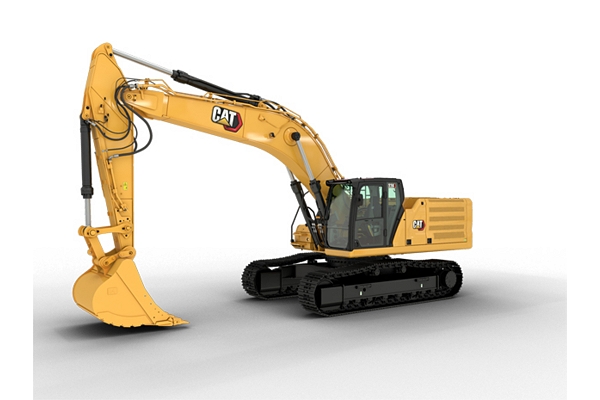
Reach Boom The reach boom features an optimum design that maximizes digging envelopes with three stick choices: R3.9B1, R2.9B1 and R2.5B1 Sticks.
- The B1-family bucket associated with these sticks have enough capacity for excellent reach and depth in trenching and general construction applications.
R3.9B1 Stick
- Stick is suited for use in trenching, excavation, and other general construction work. It has been designed with enough reach and depth to match a large-capacity bucket and high digging force.
R2.9B1 Stick
- Stick provides the most versatile front linkage with regard to reach and bucket capacity and delivers good stability for hammer work.
R2.5B1 Stick
- Stick provides an excellent digging envelope with larger bucket sizes and provides more stability than the R2.9B2 stick for hammer work.
|
 |
Special Application Reach Boom Provides additional strength recommended for tough applications.
R2.9B1 and R2.5B1 Special Application Sticks
• The R2.9B1 and R2.5B1 SA Sticks have thicker plates and are stress relieved and are used for heavy-duty applications. |
 |
Mass Excavation Boom The mass excavation boom maximizes productivity. The mass version offers significantly higher digging forces and allows use of larger buckets.
M2.4CB2 Stick
• The CB2 Stick uses a C-family bucket and was designed for high volume earth moving, powerful digging force and a large capacity bucket. Combined with a Mass boom, this stick delivers outstanding productivity. |
 |
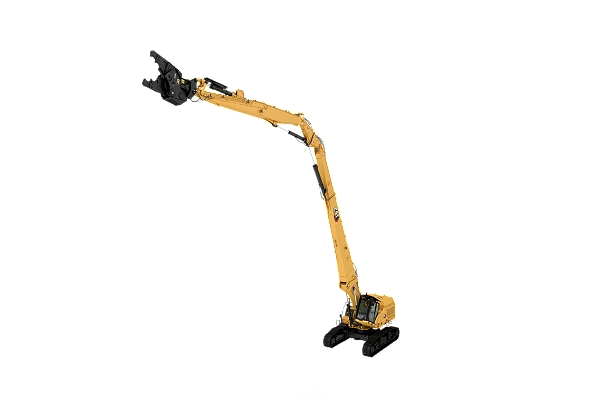
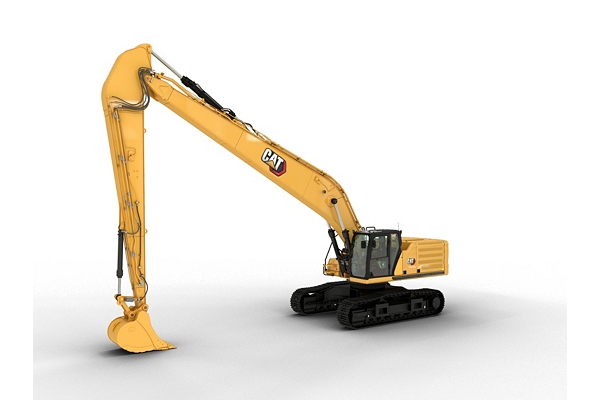
Super Long Reach Provides up to 15 m (50 ft) of reach. This configuration is designed for light duty applications that require a large working envelope, such as ditch cleaning or sloping work. |
 |
Linkage Pins
|
 |
 |  | Bucket Linkage
|
 |
 |  | Work Tools - Attachments A variety of work tools, including buckets, couplers, hammers, and shears are available through Cat Work Tools. |
 |
Wide Variety of Work Tools
|
 |
Caterpillar Buckets
|
 |
Caterpillar Ground Engaging Tools (GET)
|
 |
 |  | Couplers
|
 |
 |  | Versatility Caterpillar offers a wide variety of factory-installed attachments that enhance performance and job site management. |
 |
Auxiliary Hydraulic Options
|
 |
Service Life Caterpillar buckets increase service life and reduce repair costs.
- Dual radius designs for increased heel clearance and reduced wear
- Robot welding of hinge assembly for increased weld penetration and longer life
- High-strength and heat-treated steel that exceeds T-1 in high wear areas
- Horizontal bottom wear plates reinforce bucket for greater strength and rigidity as well as ease of replacement
- Caterpillar adapters are through hardened for excellent durability and performance
|
 |
General Purpose Buckets General Purpose (GP) buckets are best for digging in soft to hard ground with low to moderate abrasive materials. |
 |
Heavy-Duty Buckets Heavy-duty (HD) buckets are used for a wide range of moderately abrasive applications such as mixed dirt, clay and rock. HD buckets have best loading and dumping characteristics and will empty easier in cohesive material. More robust construction than the GP buckets. |
 |
Heavy-Duty Power (HDP) Buckets For use in moderately abrasive applications where breakout force and cycle times are critical. Maximizes tip force and improves cycle times in most materials. Not for use in sticky material conditions. Cutting edge and GET are up-sized. |
 |
Heavy-Duty Rock Buckets Heavy-duty rock for aggressive bucket loading in highly abrasive application such as shot rock and granite. Features include:
- Thickest wear plates to extend the life of bucket in severe applications
- Side wear plated extend further up the side of the bucket for maximum protection in rocky soils
- Buckets accept sidebar protectors for best sidebar protection, or sidecutters for best fill characteristics and bucket wear protection
|
 |
Ditch Cleaning Bucket For cleaning ditches, sloping, grading and other finishing work.
- Shallow depth and compact size make working in confined areas easier
- Drainage holes allow liquid to empty so material dumps more easily
- Optional bolt-on cutting edge
|
 |
Couplers Caterpillar offers two main coupler options for the 320D.
- Hydraulic Pin Grabber Plus – picks up work tools with standard pins, including a large variety of competitive buckets
- Dedicated Couplers – No loss of tip radius, maximizes breakout forces
|
 |
Cat Work Tools Caterpillar offers a complete line of work tools to match all of your application needs. |
 |
Hammers Matched to Cat machines for optimum performance. |
 |
 |  | Thumbs Stiff link and full rotation thumbs transform your 320D into a versatile material-handling machine. |
 |
 |  | Grapples Choose from large variety of grapples that best suit your application. |
 |
Multi-Processors A multi-processor does the work of many types of demolition tools by use of interchangeable jaws. |
 |
Shears Shears feature 360° rotation and high force to weight ratio. |
 |
Pulverizers Pulverizers are ideally suited for rapid, non-explosive demolition applications. |
 |
 |  | Vibratory Plate Compactors Compactors provide superior compaction force in a reliable, low-maintenance package. |
 |
Rippers Rippers are perfectly suited for trenching and pipeline applications where conditions aren't favorable to traditional ripping methods. |
 |
Operator Guarding Packages Caterpillar offers a variety of guarding packages to protect the operator from flying or falling debris:
- Full Length Wire Mesh Screen
- Falling Object Guarding System
|
 |
Product Link
|
 |
 |  | Machine Security
|
 |
More Attachments
|
 |
 |  | Service and Maintenance Fast, easy service has been designed in with extended service intervals, advanced filtration, convenient filter access and user-friendly electronic diagnostics for increased productivity and reduced maintenance costs. |
 |
Ground Level Service The design and layout of the 320D was made with the service technician in mind. Many service locations are easily accessible at ground level allowing critical maintenance to get done quickly and efficiently.
For example, service doors are situated on both sides of the upper structure, which allows maintenance items, such as the engine radiator or any hydraulic components, to be reachable from ground level.
Openings are large and service doors latch in the full open position. |
 |
Air Filter Compartment The air filter features a double-element construction for superior cleaning efficiency. When the air cleaner plugs, a warning is displayed on the monitor screen inside the cab.
The air filter, the access point for the washer tank, and maintenance points for electric components, such as the battery, circuit breaker and controller, are positioned behind the cab, in the air cleaner compartment. The jump-start receptacle, which is an attachment, is near the battery. |
 |
Pump Compartment A service door on the right side of the upper structure allows ground-level access to the pump, pilot filter, case drain filter and engine oil filter.
T-tap points on the pump make hydraulic system adjustment easier. Hydraulic oil level can be checked from the pump compartment. |
 |
 |  | Radiator Compartment The left rear service door allows easy access to the engine radiator, oil cooler and air-to-air-after-cooler. A reserve tank and drain cock are attached to the radiator for simplified maintenance.
In the radiator compartment, which is accessible from ground level, there is room for the shift pattern changer and the grease gun holder.
A wire mesh screen is provided between the aftercooler and radiator/oil cooler, where there is a wide enough clearance to blow off debris using a wand. |
 |
 |  | Greasing Points A concentrated remote greasing block on the boom delivers grease to hard-to reach locations on the front.
For example, the remote grease block allows the swing bearing to be greased from two points of the boom foot: one for the front half of the swing bearing, and the other for the back half.
Greasing the front linkage can be accomplished at two positions: transport position and stick vertical position. |
 |
Capsule Filter The hydraulic return filter, a capsule filter, prevents contaminants from entering the system when hydraulic oil is changed and keeps the operation clean.
The capsule filter unit is situated inside the pump compartment, and the filter is changed from the top service platform. If the filter clogs, a warning is displayed on the monitor screen inside the cab. |
 |
Anti-Skid Plate
|
 |
 |  | Diagnostics and Monitoring The 320D is equipped with S•O•SSM sampling ports and hydraulic test ports for the hydraulic system, engine oil, and for coolant. A test connection for the Cat Electronic Technician (Cat ET) service tool is located inside the cab, behind the right hand side of the seat. |
 |
Handrails and Steps Larger handrails allow easier climbing up on and down from the machine. The handrail has 850 mm (33.5 in) height from the steps that meets the requirement of the ISO2867.
The track frame and storage box have large steps for climbing. The track frame step is designed to adapt an additional step for the optional 800 mm (32 in) shoe. |
 |
Pre-Start Monitoring System A pre-start monitoring system allows the operator to check coolant, hydraulic oil and engine oil levels from the monitor inside the cab. However, the pre-start monitoring system does not cover all daily maintenance items. Caterpillar recommends the operator to also check these levels manually. |
 |
Extended Service Interval
|
 |
 |  | Complete Customer Support Your Cat® dealer offers a wide range of services that can be set up under a customer support agreement when you purchase your equipment. The dealer will help you choose a plan that can cover everything from machine configuration to eventual replacement. |
 |
Product Support You will find nearly all parts at our dealer parts counter. Cat dealers utilize a worldwide computer network to find in-stock parts to minimize machine down time. Save money with remanufactured components. |
 |
Machine Selection Make detailed comparisons of the machines you are considering before you buy. What are the job requirements, machine attachments and operating hours? What production is needed? Your Cat dealer can provide recommendations. |
 |
Customer Support Agreements Cat dealers offer a variety of product support agreements, and work with customers to develop a plan the best meets specific needs. These plans can cover the entire machine, including attachments, to help protect the customer’s investment. |
 |
Operation Improving operating techniques can boost your profits. Your Cat dealer has videotapes, literature and other ideas to help you increase productivity, and Caterpillar offers certified operator training classes to help maximize the return on your investment. |
 |
Maintenance Services Repair option programs guarantee the cost of repairs up front. Diagnostic programs such as Scheduled Oil Sampling, Coolant Sampling and Technical Analysis help you avoid unscheduled repairs. |
 |
Replacement Repair, rebuild, or replace? Your Cat dealer can help you evaluate the cost involved so you can make the right choice. |